
Kettering Previous Residents Sources
One address has several timelines. The current parcel card starts the land trail, RISS records the deed and document trail, and the county archives extend to record series that predate the web forms. Dated directories and the released federal census are the household-level evidence. No source below is a complete roster, so the best route is the one that matches the period being investigated.
| Source | Years it covers | Where held | What it shows |
|---|---|---|---|
| Auditor property portal | Tax-year choices from 1980 through current | Montgomery County Auditor | Parcel, owner and mailing fields, legal description, and deed reference where shown. |
| Recorder RISS | Current system with a separate Pre-1980 route; complete span varies by mode | Montgomery County Recorder | Party, document, date, instrument, book/page, and fiche paths. |
| County deed records | Deeds 1805-1933; index 1805-1928 | Recorder and Records Center & Archives | Earlier deed books and index research. |
| Tax duplicates | 1803-1983 | Auditor and county archives | Land and improvement values, taxes, delinquency, and transfer clues. |
| Directories and census | Year-specific directories; 1950 is the newest released federal census | Dayton Room and library research resources | Dated address and household context when the specific source covers it. |
Use the parcel, legal description, and current deed lead for recent title work. Move to the Recorder counter, GIS Abstract Books, or the archives as the trail reaches material outside a particular web-search mode. For household history, use the exact directory volume and census year rather than treating a land record as occupancy proof.
Start Kettering Past Residents at the Parcel
The county's documented house-history route begins with the current owner or legal description, not an assumed old street label. In the Auditor's address search, enter the number when known and the street name without direction or suffix. The street-name field supports a wildcard, and the county recommends trying alternate forms such as 3rd and Third. Open the matching owner detail and save the parcel ID, property location, legal description, owner field, mailing field, and current deed reference if present.
The mailing field is correspondence information. It may match the property location, but it does not prove that a named person lived there. The legal description is the more durable bridge because it identifies the lot, subdivision, tract, or similar recorded geography. That distinction prevents a history of Kettering previous residents from becoming a chain built only on similar street names.
Kettering Deed Chain for Past Owners
The Recorder's recorded-document index turns a current parcel into a title trail. RISS provides a guest route after its legal-disclaimer checkbox and offers By Name, By Type, By Municipality, By Subdivision, By STR, By Instrument, By Book/Page, By Fiche, By Pre 1980, and By Date paths. The By Name form requires Last/Firm Name, allows an optional First Name, and lets a researcher select Begins With, Contains, or Exactly. It also has Side choices labeled Both, One, and Two, plus index-type, date, and sort controls. Preserve the labels as RISS displays them.
- From the Auditor result, retain the legal description and any current sale or deed reference.
- Search the current transaction or a party in RISS and record the exact party spelling, document group, filing date, instrument number, and any book/page or fiche placement.
- Identify the prior party named in the conveyance, then find that party's earlier acquisition using the appropriate RISS or tract path.
- At each step, verify the same lot, subdivision, tract, or legal description. A surname alone is not enough.
- When the web route no longer answers the question, use the Recorder's fifth-floor records, GIS City Abstract Books, or the county archives.
- Grantor and grantee
- The parties named in a recorded conveyance. Record the role as the document and index actually present it.
- Chain of title
- A verified sequence of recorded land transactions for the same legal parcel.
- Legal description
- The lot, tract, subdivision, or other recorded land wording that joins deeds even when an address is ambiguous.
- Instrument number
- The Recorder's identifier for a recorded document, useful for requesting or checking the exact record.
RISS is not safely described with one online start date. Its separate Pre-1980 mode and the older archive series require the search method to match the document and era.
Kettering Archive Routes Before Portals
The county's archive holdings supply the early routes that current property forms cannot. Deeds run 1805-1933 with an index through 1928. Historic tax duplicates run 1803-1983, and the Archives also holds marriages from 1803-1959 plus wills and estates from 1803-1983, with the estate index running 1803-1938. These records can corroborate a relationship, transfer, or land value, but a marriage, estate, or name match alone does not establish an address.
The Montgomery County Home & Property Research Guide directs a researcher from owner or legal description to Recorder indexes, tract indexes, GIS City Abstract Books, historic tax duplicates, and original-owner tract records. The Records Center & Archives research room is at 117 S. Main Street, sixth floor, Dayton. Its staff work with more than 47,000 indexed storage locations, which makes a defined record-series request more useful than an open-ended request to identify people associated with a house.
The Recorder's published document and copy-fee information is available from the Recorder fee page.
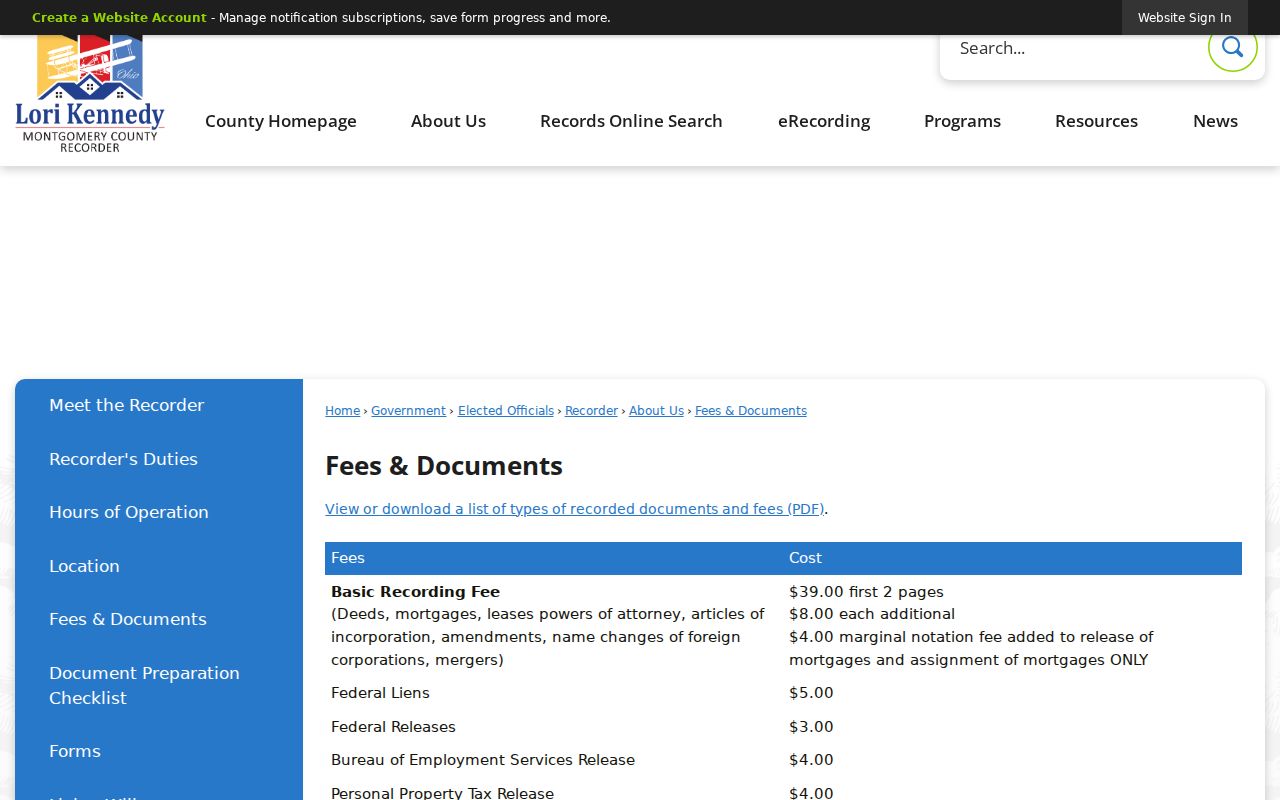
Copies and fax copies are $2 per page, while certified copies are $2 per page plus $1 certification. Verify the current route with the Recorder before ordering a record.
Kettering House History Method
Insider tip. The official county sequence is more dependable than guessing from a current street label: current parcel and legal description, Recorder or tract index, GIS Abstract Book, then historic tax duplicates and early tract material. In an Abstract Book City volume, choose the book that covers the lot range and record the seller, buyer, deed book, mortgage book, page, and sequence. Those references let an older document be checked against the same land rather than a loose address match.
Tax records can help date change to the land. A parcel may pass through several owners before a building exists. Compare a shift in improvement value with a permit and map evidence. The county guide specifically cautions against equating a first land sale with construction.
Kettering Previous Residents in Dated Directories
Owners are only part of the address story. The Dayton Room at the Main Library is the verified local-history access point for directories, newspapers, Sanborn maps, obituaries, genealogy tools, and staff help. Its contact is history@daytonmetrolibrary.org or 937-463-2665. Ask for a year and the relevant place name, then inspect both the alphabetical and street or cross-reference sections where a volume contains them. The library's public pages do not establish a complete continuous shelf run, so confirm the exact volume with staff.
The confirmed Kettering-oriented titles are Kettering Village City Directory for 1958 and 1959. Dayton Suburban directories include Kettering at least in 1956-57, 1957-58, and 1958-59. Read a directory entry using that volume's own abbreviation key. A line may contain a name, initials, spouse or widow notation, occupation clue, residence marker, street address, unit, or telephone number. It can be incomplete, and it should be treated as an entry for that edition only.
- Record the address exactly as printed and search the old and new street sections when a move is suspected.
- Place the directory on a timeline with the matching released federal census year. The federal 72-year rule makes 1950 the newest released census at the research date.
- Use Sanborn maps to test building footprint, material, street layout, or address continuity, not to identify a household.
- Use an obituary or probate file as a dated endpoint, then verify its names and property references in the proper record series.
The directory holdings themselves are covered in more detail through the Kettering city directory collection page. A house-history search uses them one dated volume at a time.
Kettering Previous Residents and Older Names
Kettering's historical labels matter. The area was Van Buren Township in 1841, became the Village of Kettering in November 1952, and became a city on June 24, 1955, with its charter effective in 1956. A pre-1952 search limited to the modern city name can miss catalog entries or records under Van Buren Township, Dayton suburban, or Montgomery County. Preserve the historic address form and legal description, then try the relevant period vocabulary.
Sanborn map material described by the library covers Ohio cities from 1882 to 1962. A map, a permit, and a tax change can help date a building. None of them, alone, identifies who lived there.
Kettering Past Residents Limits
Title history and household history are different questions. A deed can show a recorded party and transaction. A dated directory or census can show a listed household in its own period. Neither source proves every person who lived at an address, and a gap between volumes is not proof that nobody lived there. Historical records also retain their own access limits, including sealed or redacted court material and protected address information.
Vital-record access is record-specific. Ohio's certified-copy rule appears in R.C. 3705.23; use the custodian's current procedure for a requested certificate rather than inferring an address history from a name. Probate and court material can provide an estate or case trail, but check the relevant custodian for availability and certification.
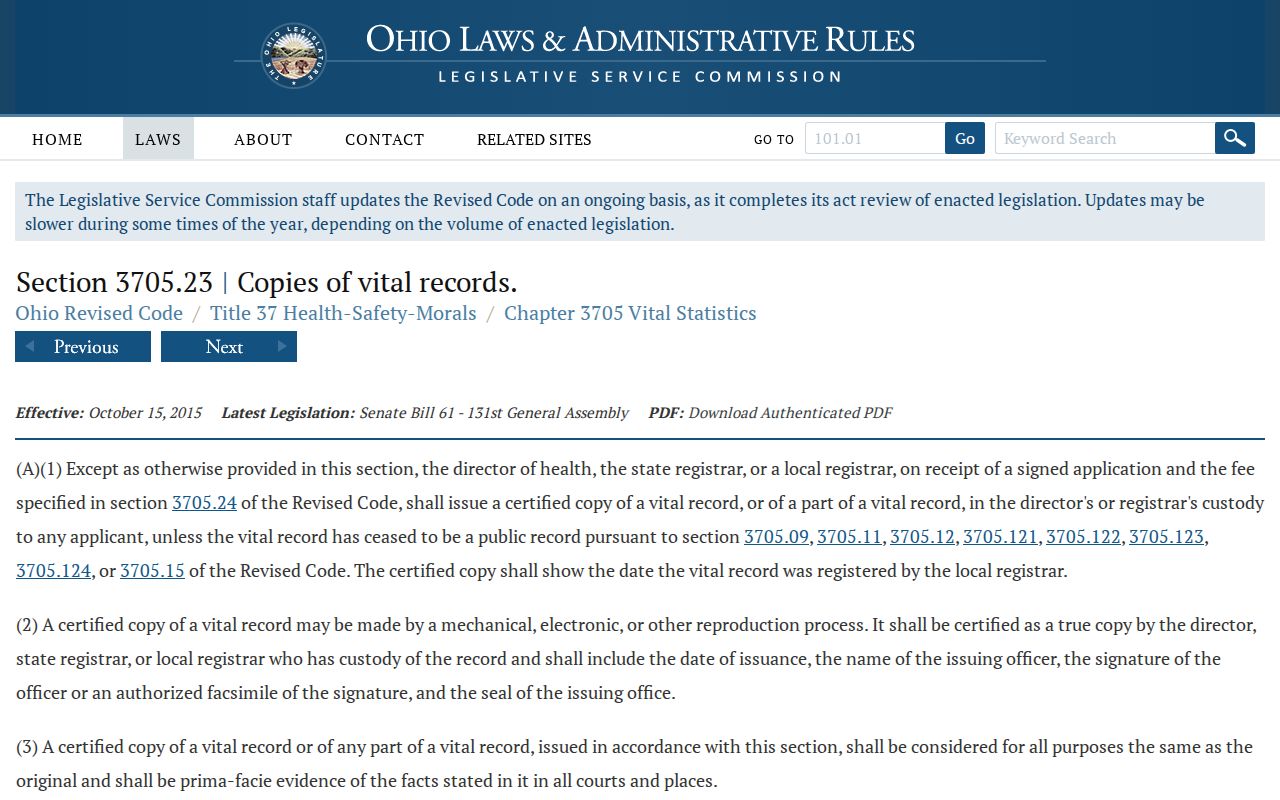
The statute confirms a records-access path, not a shortcut around the limits of a particular historical source.
Kettering Municipal Court's Clerk of Court information is a separate official contact point when a known municipal case requires a copy or status check.
Court records should be used only for the defined case or record question, because document availability and sealing rules can limit what is public.
Lawful use. Kettering previous-resident research is for house history, family history, estate questions, and personal record verification. Do not use a historical trail to contact, harass, track, or expose a living person.