
Kettering City Directory Collections
Kettering did not have a long nineteenth-century city government, so the useful directory trail is a Dayton and Montgomery County collection ecosystem. Before the early 1950s, an address may be filed as Van Buren Township, suburban Dayton, or a broader county locality. The Dayton Room at Dayton Metro Library’s Main Library is the named starting point for these city directories. Its collection combines printed and microfilm research material with local-history staff who can check a title, year, or local variant that a broad web search will miss.
| Collection | Years | Where Held | Access |
|---|---|---|---|
| Dayton city directories | Exact shelf range needs catalog confirmation | Dayton Room, Main Library | Ask staff or consult the catalog; use alphabetical and street sections where present |
| Dayton Suburban directories | At least 1956-57, 1957-58, and 1958-59 for Kettering | Dayton Room and historical-directory repositories | Confirm later local holdings by year |
| Kettering Village City Directory | 1958 and 1959 documented titles | Ask the Dayton Room first | Use beside the suburban Dayton volumes |
| Dayton Room genealogy collection | More than 200 years of local-history material | Main Library | Open stacks during normal library hours, plus consultation or appointment |
| Montgomery County Records Center & Archives | Government records from 1803 forward | 117 S. Main Street, Dayton | Staff-indexed research area for corroborating county records |
The public library pages do not publish a complete city-directory shelf inventory or a continuous publisher run. Ask specifically for Dayton city directories, Dayton Suburban directories that include Kettering, and the Kettering Village City Directory for 1958 and 1959. Confirm the title page, volume year, and any abbreviation key in the physical item. A missing online listing or a gap on one shelf does not prove that a volume was never issued.
Note: Volume keys, publisher details, and the complete shelf range require confirmation from the Dayton Room catalog or staff.
Kettering City Directory Access
The Dayton Room is on the second floor of the Main Library. Staffed room hours observed for this research were Monday through Thursday, noon to 4 p.m., with additional availability by appointment. Call 937-463-2665 and ask for the Dayton Room, or email history@DaytonMetroLibrary.org. The library also offers a one-to-one Genealogy Librarian consultation. Those options matter when a search needs an old street spelling, a township heading, or a directory year that has not been digitized.
Dayton Metro Library’s Dayton Room history page is the source for this Kettering city directory research view.
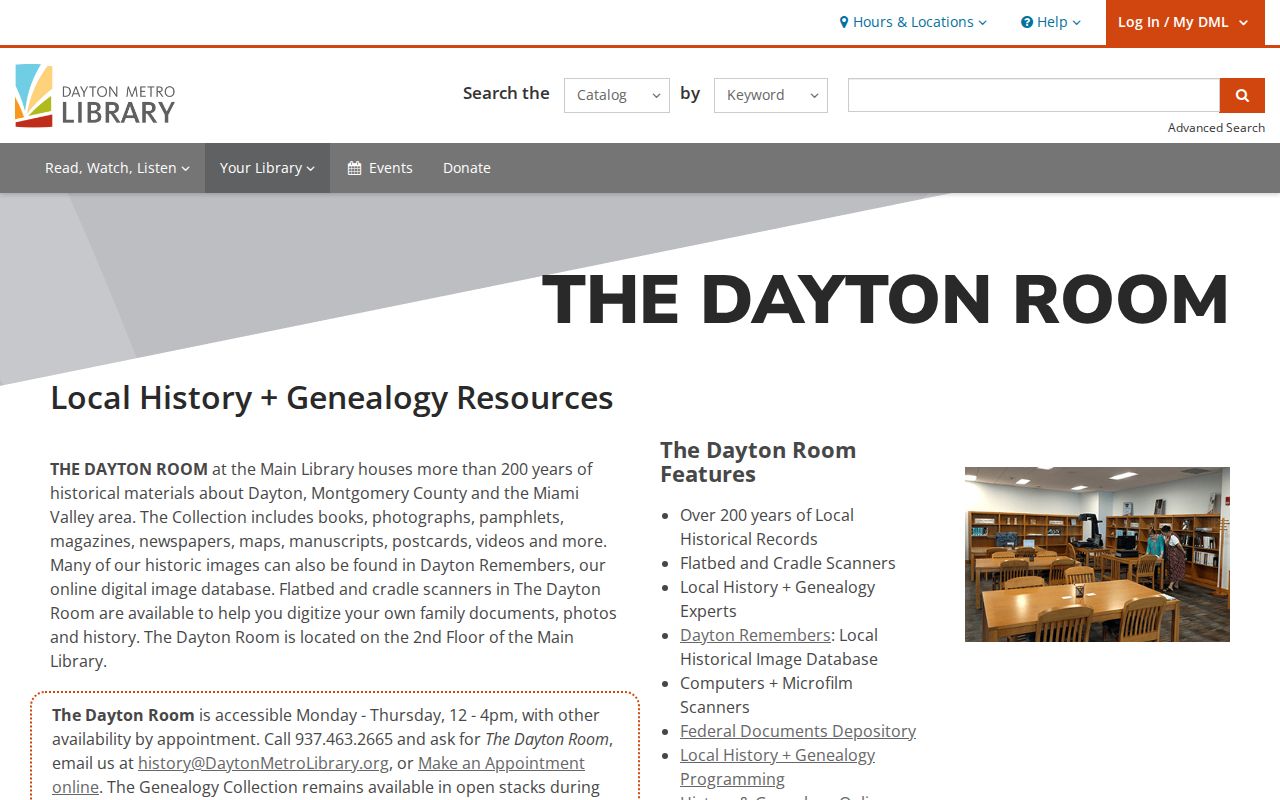
Use the room as a consultation point, not as evidence that every Kettering household appears in every year. The entry belongs to the exact directory volume and date.
The library’s history resources also list local newspapers, genealogy databases, obituary tools, Ohio death-certificate resources, census information, and Sanborn Fire Insurance Maps. Each serves a different job. Directories supply a dated household and address lead; the companion sources help test whether the lead fits the time and place.
The library research-resources page documents the local-history tools available alongside a Kettering city directory search.

A staff member can help separate a directory lead from an obituary, newspaper, or map source rather than treating every local-history search as the same kind of record.
Kettering Directory Name Changes
Insider tip. Search Kettering alongside Van Buren Township and Dayton terms. The area was part of Van Buren Township in 1841, incorporated as the Village of Kettering in November 1952, and became a city on June 24, 1955; its charter took effect January 1, 1956. A directory heading, tax source, map, or deed can use the older geography even when the present address is in Kettering.
That timeline is useful for choosing a catalog term and a date range. A postwar directory entry may be placed under a suburban Dayton run during the village transition. Earlier material can be associated with township or county language. Do not retrofit today’s postal geography onto an older city directory. Instead, preserve the address as printed and record the volume’s own locality heading.
| 1841 | Van Buren Township provides a pre-city index term. |
|---|---|
| November 1952 | Village incorporation can change civic headings without changing every older reference. |
| June 1955 to January 1956 | City status and charter mark the modern municipal frame. |
County records are older still. Montgomery County was created in 1803, so deeds, probate material, court sources, and tax records may offer the archival frame when a Kettering city directory does not reach far enough.
Reading Kettering City Directory Lines
A directory entry is a dated shorthand record, not a full biography. The Dayton Room’s public pages do not expose an individual digitized local entry, so the symbols and fields must be checked against the title page and abbreviation key in the exact volume. A typical Dayton-area entry can organize surname, given name or initials, spouse or widow notation, occupation or employer clue, residence prefix, street address, unit, and telephone number. It may omit other household members or show a work location instead of a residence.
| Name line | Record the spelling, initials, and punctuation exactly as printed. |
|---|---|
| Spouse or widow note | A relationship clue that needs confirmation in an independent record. |
| Occupation or employer | A contemporary clue, not proof of a lasting role or location. |
| Address and unit | Keep the street form and unit as printed for a later address comparison. |
| Telephone or residence prefix | Interpret only with the volume’s own key. |
- Criss-cross directory
- A street-order section, when included, that starts with an address rather than a surname.
- Householder index
- An index that can group an address under a named household head, subject to the volume’s rules.
- Abbreviation key
- The volume’s explanation of its marks and short forms. Photograph or transcribe it before interpreting an entry.
Turn from a street or reverse section to the alphabetical portion before connecting a person to a line. A criss-cross section may list an occupant, owner, or business according to that volume’s editorial practice, so it cannot establish continuous occupancy by itself.
Kettering Directory Map Companions
Dayton Remembers gives a digitized local context layer, while Sanborn maps help test the physical address. The library describes its Ohio Sanborn collection as detailed city maps made from 1882 through 1962. Use a dated map to see a building footprint, street layout, or lot pattern, then keep that observation separate from the directory entry that names a household. The Dayton Daily News resources, obituary database, and census sources can supply other date-specific checks.
Dayton Remembers digital collections provide digitized local context and finding aids. The catalog record and original item remain important for title, date, and provenance.
For an address question, compare the map year with the directory year and then use a parcel legal description or recorded instrument if the research moves to ownership. The historical shelf belongs to city directories; current address records are treated separately in the Kettering street directory.
Note: A map can show a structure or street pattern, but it does not identify every person connected with the address.
Kettering Directory Archive Checks
Montgomery County Records Center & Archives extends a Kettering city directory lead into county-created records. Its research room is at 117 S. Main Street in Dayton, and staff can locate material across more than 47,000 indexed storage locations. The archive holds marriages from 1803 through 1959, deeds from 1805 through 1933 with an index from 1805 through 1928, wills and estates from 1803 through 1983 with an index from 1803 through 1938, and historical court materials. Records are staff-indexed rather than browsed from open shelves.
Montgomery County Records Center & Archives documents the county holdings shown in this Kettering city directory image.
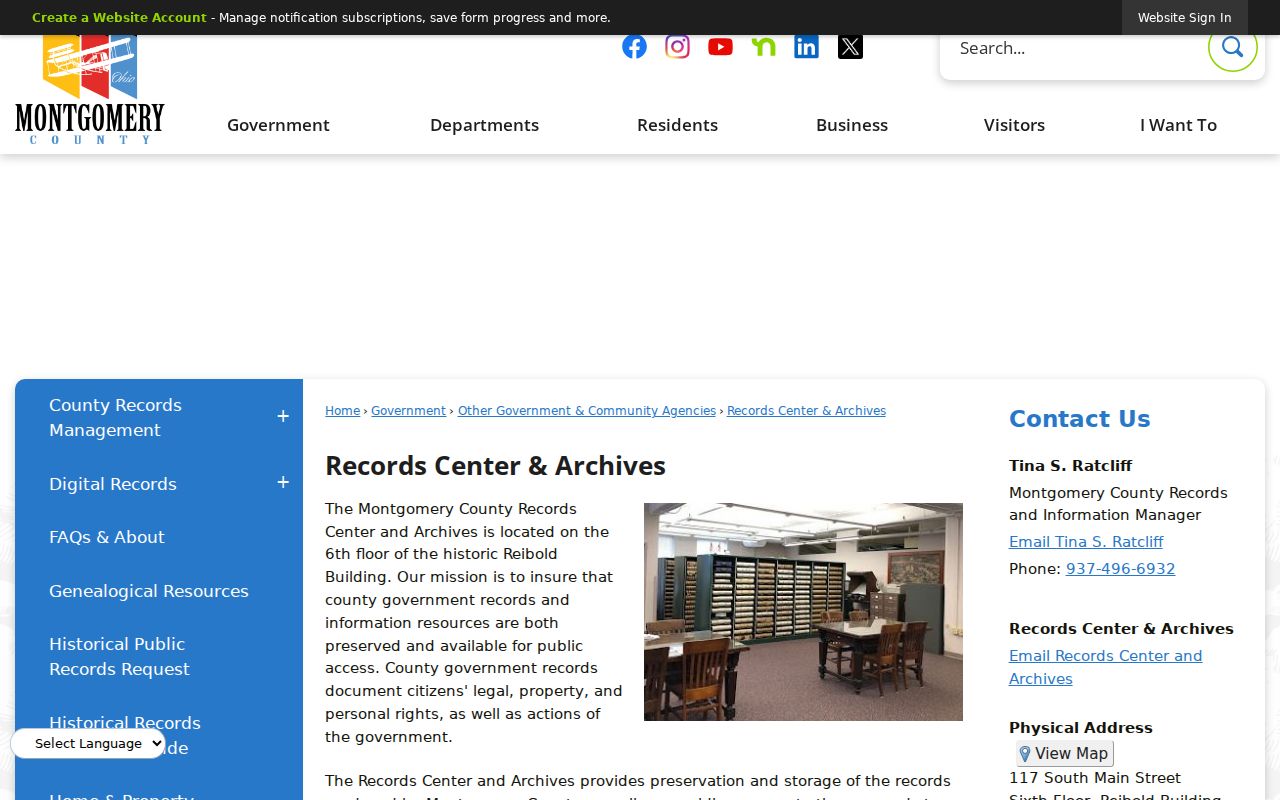
Send a full name, record type, and relevant dates for an archive request. A directory line can guide that request, but it does not replace the archive record.
The county’s Historical Records Collection Guide is useful when the trail moves from a printed household entry to deeds, tax material, marriages, estates, or court sources. It also helps keep a record’s time period clear. A later directory is not proof of an earlier connection.
The county historical-records guide is the source for this Kettering city directory archive reference.
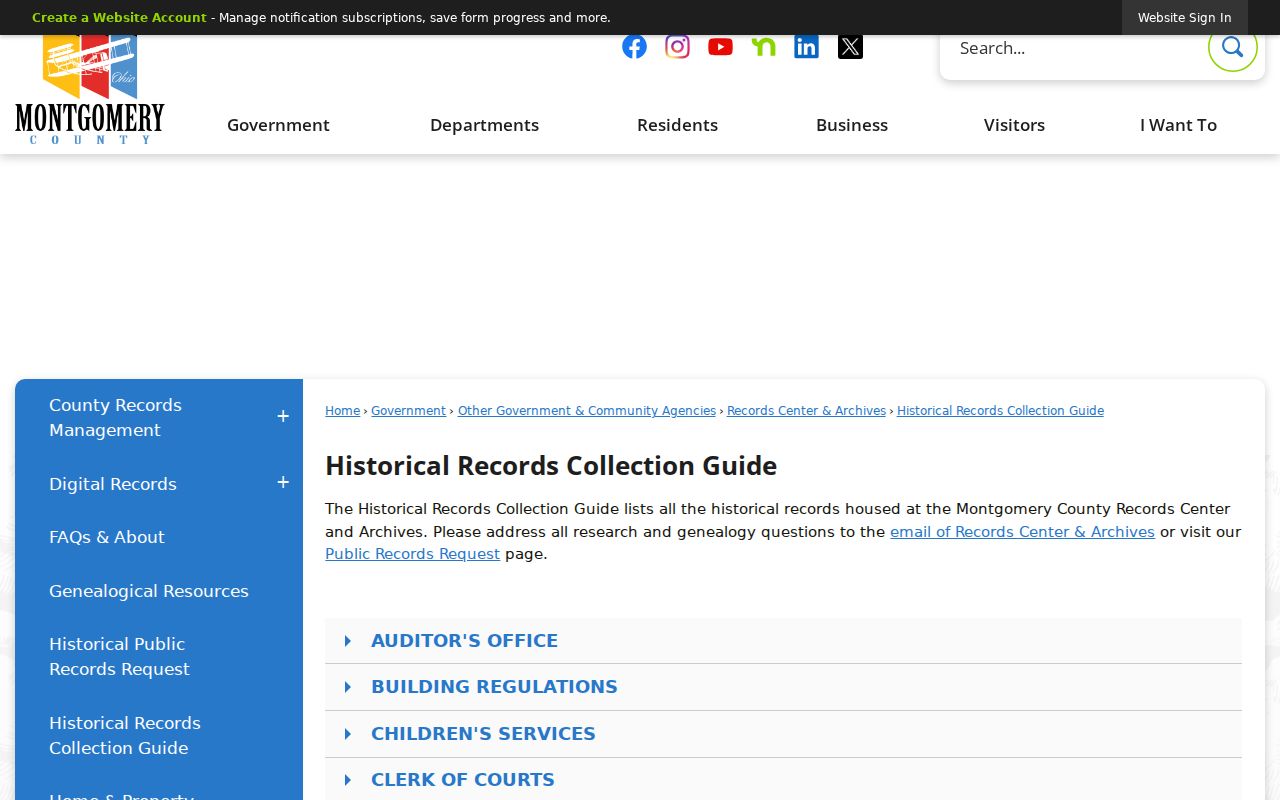
County archive material gives a dated, custodial source that can confirm or correct a directory-based lead.
Trace Kettering City Directory Households
Use a Kettering city directory as a year-by-year trail. Begin with the newest address form you can verify through a parcel card or city item, including direction and unit. Then work backward or forward one volume at a time. Copy what appears, rather than translating it into a modern address before the comparison is complete. Changes in spelling, a widow notation, an occupation clue, or a new street address can tell you where to check next.
- Find the person or address in a dated directory volume and record the entry exactly.
- Check the next available year, plus the old and new street sections if the address changes.
- Search Kettering, Dayton suburban, and Van Buren Township headings when the era calls for them.
- Pair the sequence with released federal census years. The 1950 census was the newest released federal census at the time of research under the normal 72-year rule.
- Use an obituary, newspaper notice, map, deed, probate item, or tax source to test a move, death, ownership change, or building history.
A disappearance has several possible meanings: a move, death, unlisted household member, altered spelling, or a volume gap. It is not a finding by itself. When a historical directory lead needs a modern name-and-record check, use the Kettering resident lookup process rather than assuming the old entry describes a current resident.
Kettering City Directory Limits
City directories are strongest when the question is narrow: who was printed at this address in this volume, and what dated source can confirm the next step? They do not create a complete list of Kettering residents, prove that a person remained at an address after publication, or establish ownership. Directory editors could abbreviate a name, omit a person, carry an old address, or use a work line. Preserve the citation, volume year, locality heading, and page or column whenever possible.
Montgomery County’s history page provides the county context behind this Kettering city directory research image.
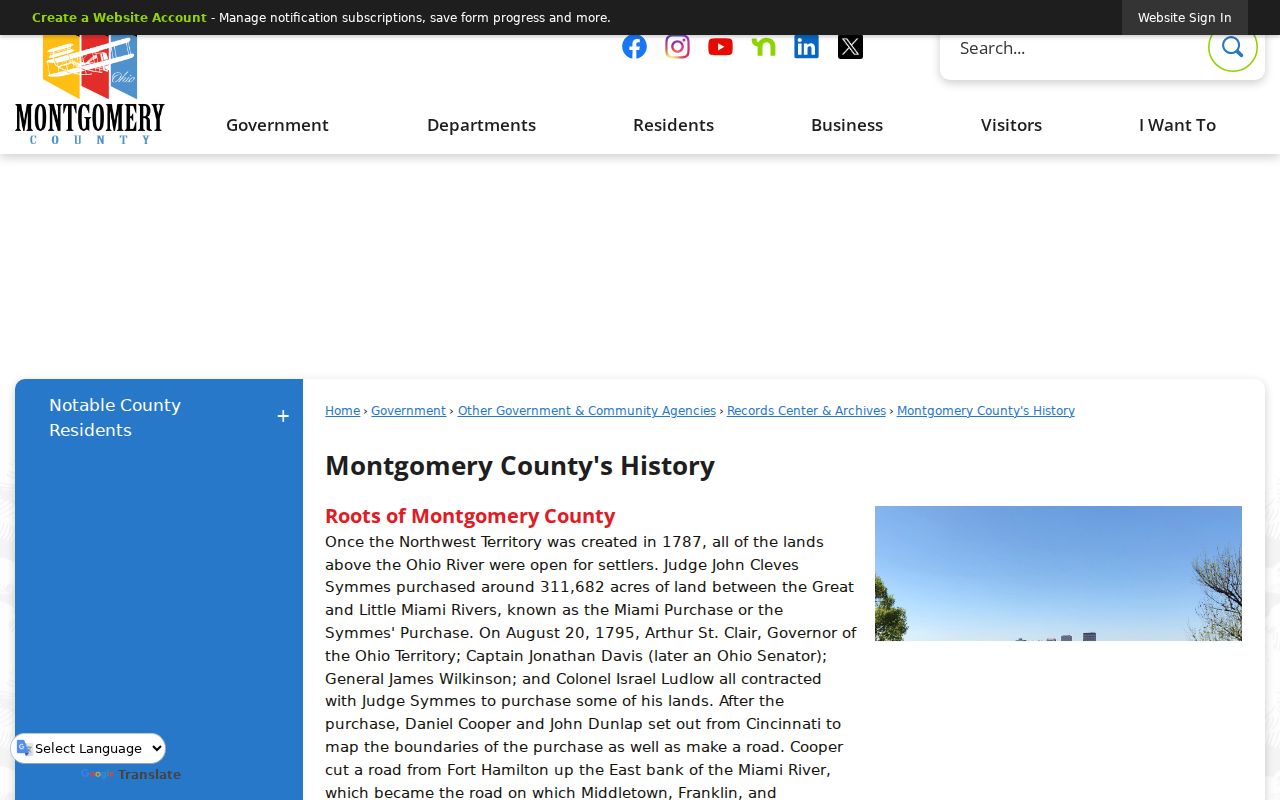
The county system predates Kettering, which is why township and county sources can be necessary for a local directory question.