
Kettering Neighbors Block Coverage
Several record layers sit behind every Kettering block search. County parcel tools display land geometry and the owner of record for a chosen parcel. Recorder documents trace its title and transactions. City records add dated permits or maintenance items. Voter rolls and historical directory entries are thinner and more limited. None of it assembles a complete roster of Kettering neighbors, but together these records explain the public context around an address.
| Source | What It Shows About a Block | Access |
|---|---|---|
| Auditor GIS and parcel search | Parcel geometry, property location, and a path to the selected parcel record | County map access, then separate Auditor confirmation. |
| Recorder RISS | Recorded parties, document type, filing date, and title-related placement for an identified parcel | Guest entry after disclaimer, with counter fallback. |
| Access Kettering | Address, owner, permit, engineering, or property-maintenance record routes | Public research is available without a login; module details differ. |
| Board of Elections | Existing precinct-list or registration material under the election rules | Counter, request, or named-person voter-search route. |
| Dayton Room | Historical street or cross-reference entries when the exact directory volume includes them | Main Library research help, collections, and appointment options. |
| City neighborhood program | Public neighborhood vocabulary and participation contacts | City information, not a member roster or private directory. |
Parcel ownership is the narrowest starting fact. An owner of record may not be the occupant, and the tax mailing address can differ from the property location. A Kettering parcel boundary is a guide, not a household roster. Use it to pick the next record.
Kettering Neighbors Parcel Method
Follow the county's documented address workflow before scanning an entire Kettering block. In the Auditor address search, the street-name field should omit the direction and suffix, the number stays optional, and a wildcard can broaden the query. Open the parcel result. Record its parcel ID, property location, legal description, tax year, and any sale or deed reference. The legal description is the stable link. Use it whenever a street label is not enough.
- Locate the focal Kettering address in the Auditor address search and open the matching parcel record.
- Save the parcel ID and legal description, then open the Auditor GIS map to orient the selected lot.
- Visually identify touching or nearby parcel polygons, select each candidate parcel or run a separate Auditor address search for it.
- For each parcel, keep the owner-of-record, property location, mailing distinction, legal description, and a Recorder or city-record lead as separately labeled facts.
- Use RISS for a selected parcel's recorded-document context and compare the same legal description or lot, rather than relying on surname alone.
GIS parcels invite a shortcut. The county's GIS documentation describes no dedicated neighbor, buffer, or select-adjacent control. Adjacent polygons have to be read visually. Each nearby parcel then needs its own query. That is the supportable Kettering method. A full named-street record chain continues with the Kettering street directory, which carries the address workflow farther along a corridor.
Note: Map layers can change and the county disclaims any data warranty, so confirm each Kettering parcel against the authoritative record.
Kettering Neighbors Owner Boundaries
An owner field answers one question only. It shows ownership, not the household inside. The Auditor parcel summary keeps the property mailing address and ownership information separate from the situs, the physical parcel location. A recent buyer and deed reference can anchor a Kettering title trail, yet neither field says who lives there now. Keep the property location, mailing address, tax year, and ownership data in separate notes.
For a selected Kettering parcel, RISS can add an indexed party name, a document group, a filing date, and an instrument, book, page, or fiche reference. The recorded party may be a buyer, seller, lender, or signer. That is not proof of residency. The county home-and-property method uses the Auditor, Recorder, tract index, abstract materials, and archives to trace title. Title is not a household roster.
This matters most with a persuasive mailing result. Mailing information directs tax correspondence. It may match the property. It may also lead somewhere else entirely, which is why a match settles nothing by itself. Treat a match as a reason to inspect the source date and legal description, never as a basis for an occupancy claim.
Kettering Voter Record Limits
Ohio's Voter Search is name-led, not a street browse. You enter a first name, a last name, and a county. A street-name option appears only after a match. For most Kettering addresses, Montgomery is the right county after the parcel jurisdiction is checked, and official tips also permit a derivative first name, a former last name, or a previous Ohio address in another county.
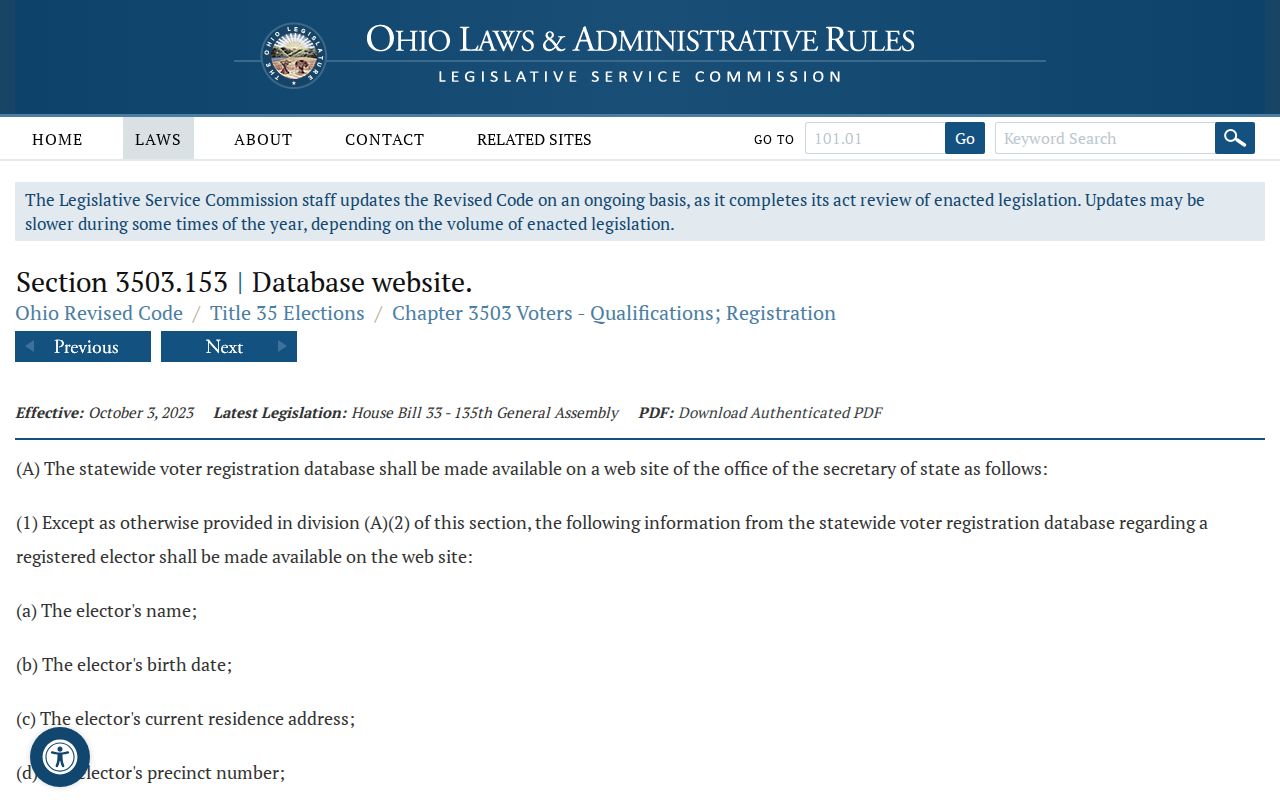
R.C. 3503.153 describes the public website fields for a registered elector, subject to exceptions. It names registration and precinct context for one person. It never reveals ballot choices. Precinct lists are different. They follow separate public-inspection and copying rules under R.C. 3503.26. They organize by precinct, not by Kettering street.
The official text of Ohio's voter-data publication rule sets the public fields behind any Kettering voter record.
Safe at Home participants stay out of public voter access. A protected or missing result should not be pursued through other sources. A Kettering voter result or precinct list is not a block roster. A precinct list is not a block roster. Treat it as one record among many. A Kettering voter entry shows registration, not who lives next door.
Note: A Kettering precinct list is an election record. It is not proof that every listed person is a nearby neighbor.
Kettering City Record Context
Kettering's city access portal adds a civic layer that county parcel records leave out. Its property-information route searches by address, owner, or permit. The property-maintenance route digs deeper. It accepts record number or type. It also takes date range, street-number range, direction, street name and type, unit, and city. A Kettering permit or enforcement file proves that a city record exists. It may supply a date or a subject. It cannot prove the work was finished. It also cannot name every person tied to the address.
Self-service options have limits. Ohio's Public Records Act lets a resident request an existing record when the portal runs dry. Statutory exceptions still apply. Name the agency, the address or parcel, the date range, and the record series. Say what medium you want. The office must provide or organize what exists. However, it has no duty to build a fresh analysis of a Kettering block. Asking for a defined permit or property-maintenance file beats asking broadly. It works better than a broad request for people linked to an address. The Ohio Public Records Act text governs this Kettering public-records path.
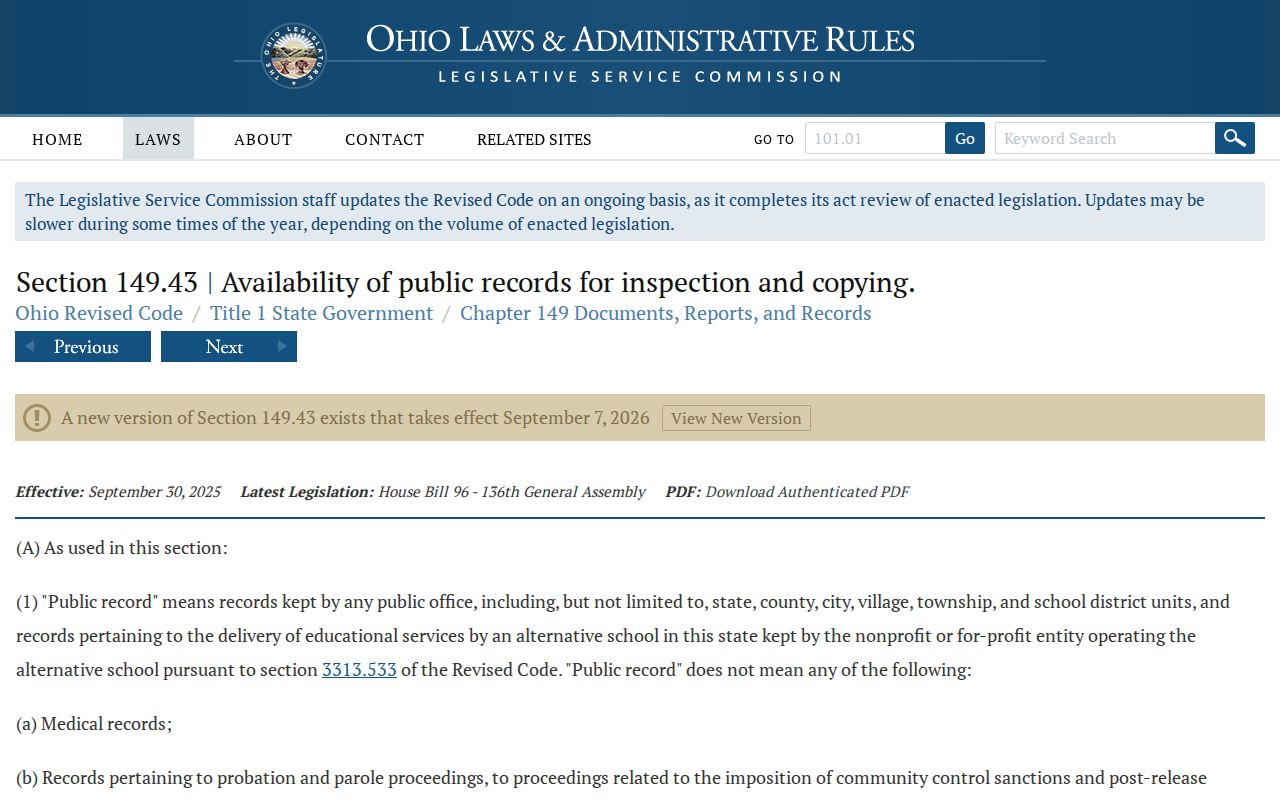
The statute opens the door to existing records. It does not turn permits, parcel fields, or a mailing address into a full Kettering neighbor directory.
Kettering Community Record Vocabulary
City-recognized place names can orient a Kettering block without proving any private affiliation. Kettering's neighborhood program history names Van Buren, Habitat Environmental Center, Sunny View Acres, Irelan Estates, Rubicon Heights, Haverstick, Oak Park, Berwin Park, Southern Hills, Indianola, and Richman Heights. Those labels work well as search terms. Once a parcel yields the legal description, a neighborhood name can help locate a plat, map, city plan, or public meeting record.
No official citywide roster exists in these sources. There is no neighborhood-association membership directory, HOA member directory, or block-watch roster among the public material. That gap matters. A neighborhood name is search vocabulary. It is not proof that an address belongs to an organization or that a person takes part. Turn to the city and library contacts for public documents rather than private contact lists.
City neighborhood participation
Public program and volunteer contact for Kettering neighborhood participation.
937-296-2433
Kettering-Moraine Branch
Convenient local library point for public materials and community context.
3496 Far Hills Avenue
Dayton Room
Historical directories, maps, newspapers, and staff direction at the Main Library.
937-463-2665
Older Kettering block context has its own trail. The Dayton Room can link a date-specific directory to a name. It can also match a map to an address. Kettering's older records also sit under Van Buren Township or Dayton-oriented headings. Search a historical label alongside the current city name for the fullest results.
Kettering Neighbors Evidence Comparison
Official records and commercial neighbor tools answer different questions. A Kettering parcel record identifies a property-record connection. Recorder documents name recorded parties and dates. City files establish a civic record. Commercial tools can merge data from many sources, but the category invites stale, duplicated, or misattributed entries, and it cannot replace a custodian's record.
| Evidence layer | What It Can Support | What It Cannot Establish |
|---|---|---|
| Auditor parcel and GIS | Parcel geometry, property location, legal description, and owner-of-record path | A complete household or present occupancy. |
| Recorder RISS | Recorded-party, document, filing-date, and title-trail context | That every party still lives at the parcel. |
| Access Kettering | A dated city permit or property-maintenance record | A full list of people associated with the property. |
| Commercial neighbor tools | A possible lead that needs independent source checking | Reliable proof of current residence or a protected person's location. |
Conflicting Kettering results call for one move. Return to the source that created the record. Compare the date, the legal description, the address label, or the case context side by side. The approach takes longer. Yet it is far more defensible than stitching loosely matched data together.
Note: A Kettering mailing label, an owner field, and a map pin can each describe a different part of the same record trail.
Kettering Privacy Record Limits
Public availability never erases context. Safe at Home assigns a designated address to qualifying participants. It also shields covered location and contact details. R.C. 3503.26 also exempts those participants from public election-list access. Utility, delivery, medical, school, and motor-vehicle customer data are not an open Kettering block-record source. Courts may withhold sealed or redacted material, including protected-order information and personal identifiers.
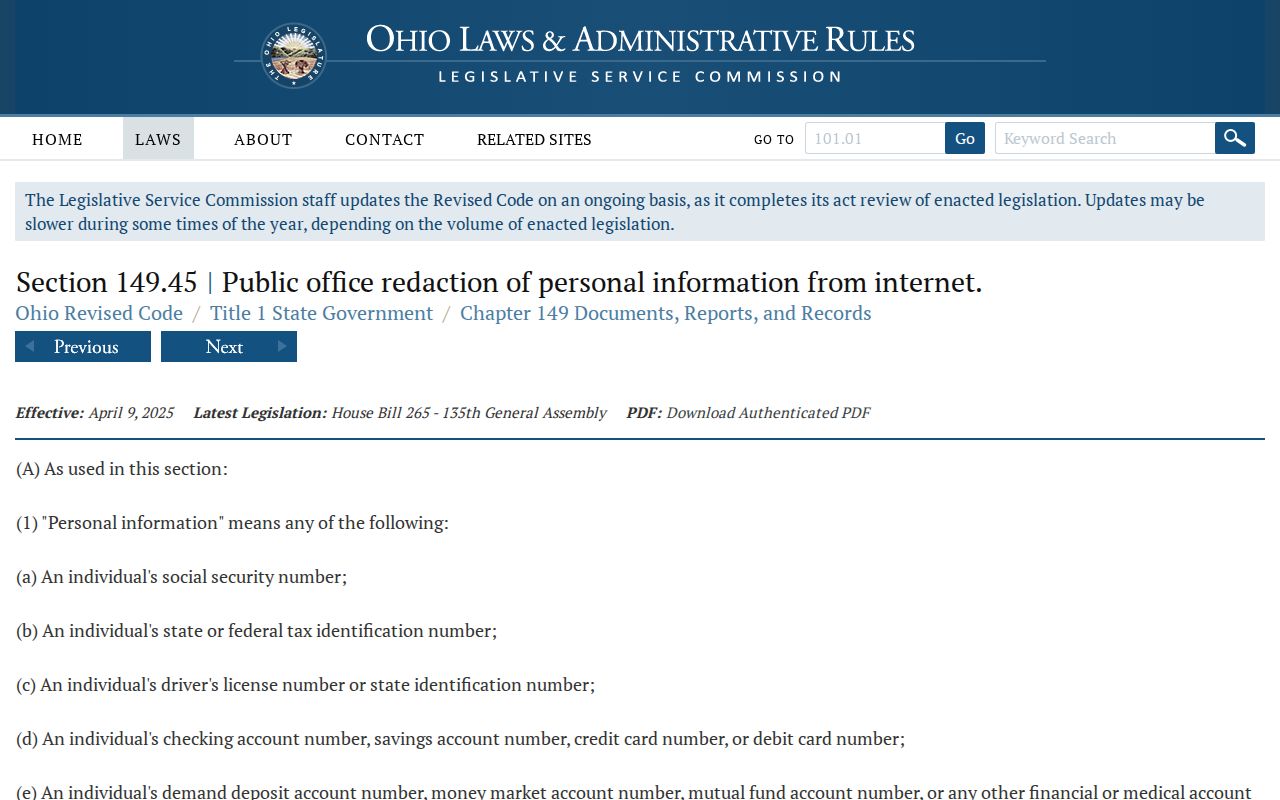
R.C. 149.45 gives qualifying people a way to seek Internet redaction from public offices. Suppose a Kettering address, map, or index result looks inconsistent. Do not try to reconcile a protected location through other tools. Quote only what identifies the record. Keep its source and date. Contact the custodian for a correction or an access question. The Ohio online-redaction provision is the source for this Kettering redaction rule.
Use records to understand properties, public procedures, local history, or civic context. Never use them to expose, pressure, follow, threaten, stalk, harass, or harm another person.